TMJ Treatment in Houston: Relief for Jaw Pain, Clicking, and Headaches

If your jaw is aching by mid-afternoon or is clicking every time you take a bite, then the issue may not be solely a jaw problem. At Houston Spine & Rehabilitation Centers, we develop nonsurgical TMJ treatment plans in Houston by evaluating the jaw, neck, and posture of patients like you. Our goal is to get rid of your pain without the need for dental appliances.
What Does TMJ Disorder Feel Like?

TMJ disorder, also called temporomandibular disorder or TMD, is a group of conditions that affect the jaw joint and the chewing muscles around it. For many people, symptoms settle without treatment, while in others, they become long-lasting and flare up over time. Common symptoms include:
- Jaw pain, clicking, or stiffness when opening wide
- A jaw that catches or locks partway open
- Ear pain or a full feeling in the ear without an infection
- Pain at the temples
- A tired, sore jaw after meals
Why Jaw Pain Is Often a Neck and Posture Problem

Jaw pain is often linked to neck tension and poor posture because the muscles that control your jaw also work with those that support your head and neck.
When your head shifts forward, the muscles in your neck work harder to support it. This can affect your jaw’s resting position and increase the strain on your chewing muscles.
Jaw clenching can add to that strain. When you clench your teeth under stress, tension can spread to your neck and shoulders, contributing to both jaw pain and neck pain. Because these issues can reinforce each other, evaluating the jaw alone may overlook other factors contributing to your symptoms.
The table below is a comparison between a jaw-only assessment and a broader approach that considers the jaw, neck, and posture.
| Jaw-only view | Jaw, neck and posture view | |
|---|---|---|
| Where the problem sits | The jaw joint and teeth | The jaw, chewing muscles, neck, and upper back |
| What gets checked | Bite, teeth, and joint sounds | Jaw movement, joint sounds, neck motion, head and shoulder posture |
| What it can miss | Neck tension and desk habits that keep loading the jaw | Dental issues, which need a dentist |
How We Assess TMJ Pain at Our Houston Clinic

Finding the cause of jaw pain starts with a thorough assessment. We evaluate your jaw movement, joint function, surrounding muscles, and neck posture to understand what may be contributing to your symptoms.
- Health history: We ask when your pain began, whether you clench or grind your teeth, and whether you have a history of injury, headaches, or limited relief from a night guard.
- Jaw opening and movement: We conduct a three-finger test to assess how your jaw opens, closes, and moves from side to side.
- Joint sounds: We listen for clicking, popping, or grating as you open and close your mouth. These sounds help guide the assessment, but do not necessarily indicate a disorder on their own.
- Muscle exam: We gently examine the muscles around your jaw, temples, and neck for tenderness or tightness that may contribute to pain in nearby areas.
- Neck and posture exam: We assess your neck’s range of motion and check your head and shoulder alignment for contributing factors.
Our TMJ Treatment Options in Houston, TX
At Houston Spine & Rehabilitation Centers, we take a nonsurgical approach to TMJ care, focusing on easing jaw pain and improving everyday function without permanently changing your jaw, teeth, or bite. Here’s how our step-by-step approach works.
| Step | Goal | Treatments |
|---|---|---|
| 1. Calm the muscles | Ease tension and tenderness in the jaw and neck | Soft tissue work, Active Release Technique, dry needling, cold laser therapy |
| 2. Restore movement | Help the jaw and neck move more freely | Gentle chiropractic care for the neck and upper back, jaw mobility work |
| 3. Build better habits | Support comfort through your workday | Physical therapy exercises, posture mindfulness, and ergonomic desk setup |
Dentist or Spine and Rehab Clinic: Who Should You See First?
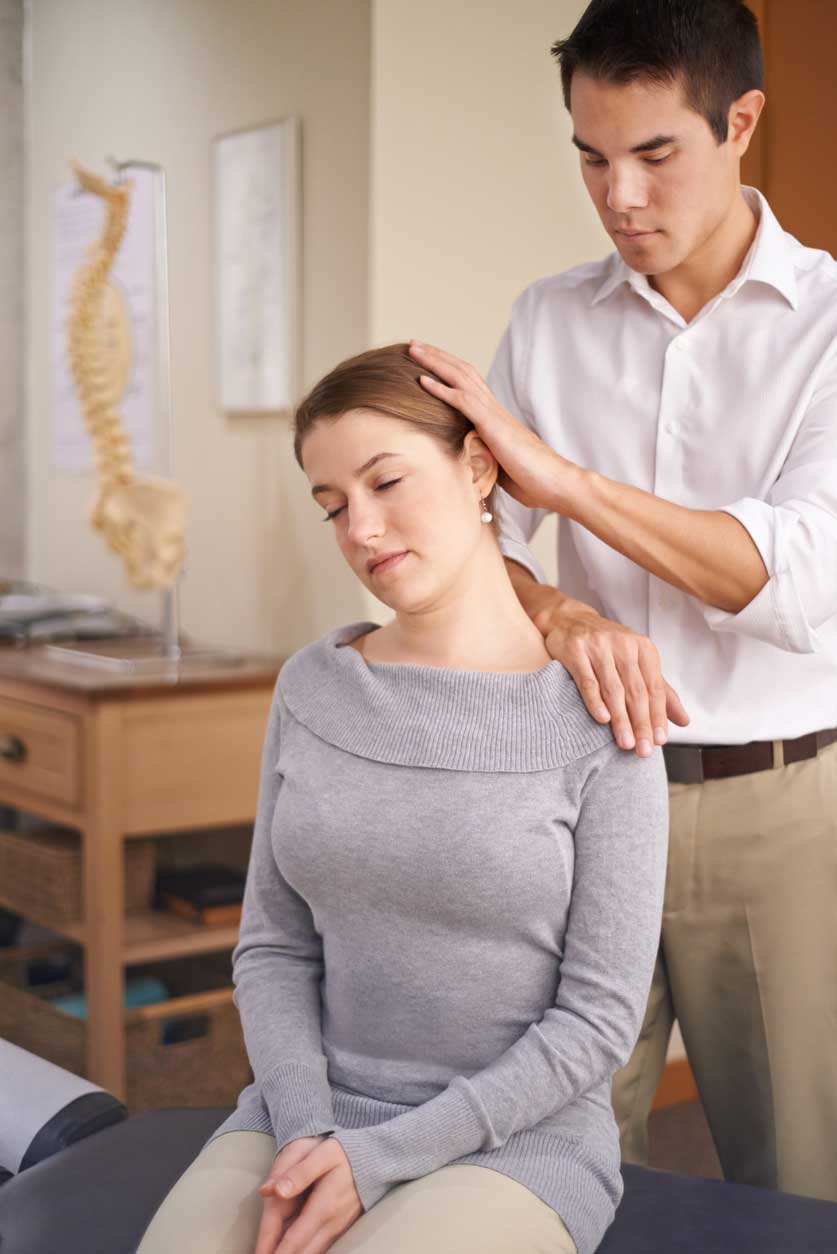
To determine which healthcare provider you should see first, observe your symptoms and what may be causing them. A dentist is usually the right choice if your jaw aches due to a tooth or bite problem, while a spine and rehab clinic can help when there is neck pain, shoulder pain, and headache involved.
Get Your Jaw and Neck Checked in Downtown Houston
You deserve care that looks at the whole picture rather than just your symptoms. At Houston Spine & Rehabilitation Centers, we look at your jaw, neck, and posture before creating a nonsurgical care plan specifically for you.
Ready to start feeling relief? Schedule a consultation for TMJ treatment in our Houston clinic or call us directly at 713-652-4052. You can find us at 2202 La Branch Street, Houston, TX 77002.
TMJ Treatment FAQs
The right provider depends on what is causing your symptoms. A dentist is best suited for tooth pain, bite problems, or teeth grinding that may require a night guard. If jaw pain occurs alongside neck pain, headaches, or postural strain, a chiropractor for TMJ in Houston, TX, can assess how these issues may be connected and recommend appropriate nonsurgical care.
For many people in Houston with TMJ disorder, symptoms often settle on their own or with simple conservative care. However, some cases become long-lasting and flare up over time, at which point a treatment plan that addresses the jaw, neck, and posture can be most helpful.
In many cases, yes. A chiropractor can treat neck and upper back tension that often accompanies TMJ and use gentle techniques for the jaw muscles. At our Houston clinic, chiropractic care is combined with physical therapy and soft tissue work.
It is a quick check of how wide your mouth opens, using the width of your fingers as a guide. A limited opening can be a sign of TMJ problems, although the test is only one part of an exam and cannot make a diagnosis on its own.
Your cost depends on your insurance and the treatments in your plan. Before your first visit, our team can check your coverage and explain any costs, so you know what to expect.
Many people notice improvement within a few weeks of consistent care, but timelines vary with the cause and how long symptoms have lasted. Home exercises and habit changes can speed things up. Your provider will reassess your progress at set points and adjust the plan if you are not improving as expected.