Scoliosis Treatment in Houston
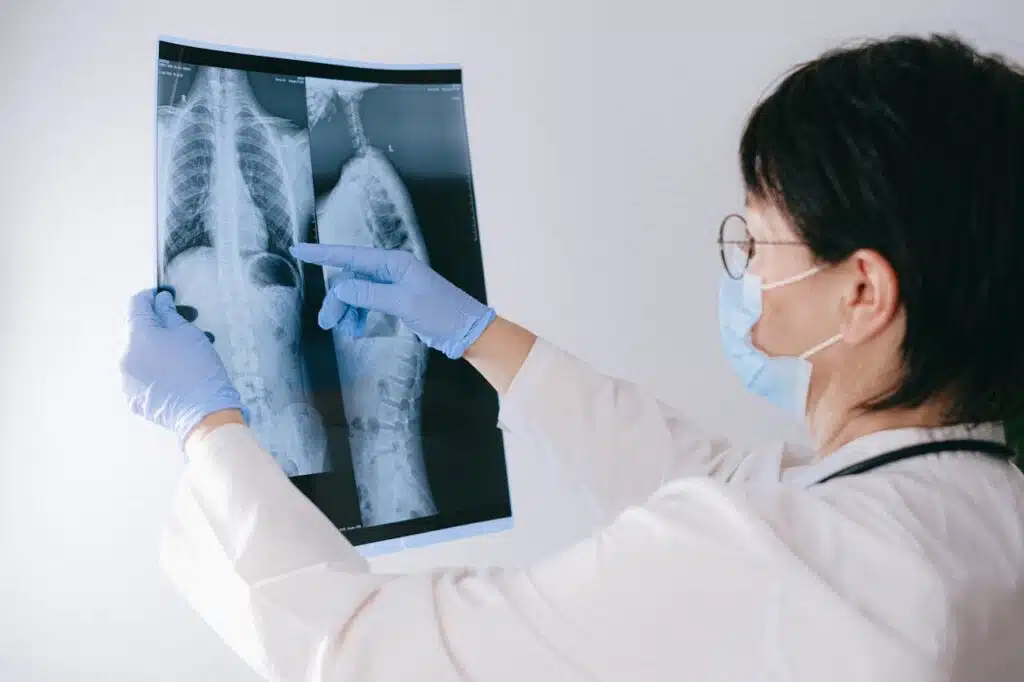
Have you noticed uneven shoulders or a tilted waistline in yourself or your child? Scoliosis can develop during pre-pubertal growth spurts and, if ignored, can lead to spine issues. At HSRC, we offer scoliosis treatment in Houston through personalized surgical and nonsurgical care to help manage spine curvature and overall health.
What Is Scoliosis?
Scoliosis is a physical condition in which the spine curves abnormally to the side. It can appear at any age, but is most common in kids between 10 and 18 years old. Scoliosis is categorized into three types:
- Levoscoliosis: The spine curves to the left side of the body, forming a left C-shaped curve
- Dextroscoliosis: The spine curves to the right side of the body, forming a right C-shaped curve
- Double Curves: The upper and lower spine curves in opposite directions, forming an S-shaped curve
Although no one’s really sure what causes scoliosis, genetics, neuromuscular disorders, congenital disabilities, or spinal injuries are often suspected as contributing factors. If left untreated, scoliosis can affect the internal organs. As such, early evaluation and treatment of scoliosis is key to preventing progression and complications.
Common Signs and Symptoms
Is your child’s posture looking a bit off? Are you noticing uneven shoulders or tilted hips? Scoliosis can manifest through subtle changes, often initially without pain. Here are a few signs you should watch out for:

- One shoulder appears higher than the other
- Waistline is uneven or tilted
- One hip sits higher than the other
- Persistent back pain or discomfort
- Reduced mobility or stiffness in severe cases
We recommend comprehensive health evaluations to detect early signs of scoliosis. Through early intervention, we can help prevent other health complications associated with scoliosis, such as chronic pain, breathing issues, and mobility problems.
Comprehensive Scoliosis Treatment in Houston
At Houston Spine and Rehabilitation Centers, we treat scoliosis using a variety of medical approaches. We design holistic treatment plans tailored to your unique needs and condition.
Chiropractic Care
We use gentle, targeted adjustments to promote optimal spine alignment. Our pediatric and adult chiropractic care for scoliosis focuses on nonsurgical scoliosis care and posture correction, using techniques such as:
- Flexion-Distraction (Cox Technique): A gentle, hands-on technique that helps reduce pressure on vertebrae and discs
- Active Release Technique (ART): Soft-tissue treatment that breaks up knots or muscle adhesions surrounding the spinal curvature
Physical Therapy & Rehabilitation
Our physical therapy programs help strengthen your core, back, and posture muscles. It’s a great way to reduce discomfort, improve mobility, and address other challenges of scoliosis. Our physical rehabilitation for scoliosis includes:
- Land Therapy: Guided, weight-bearing exercises on solid ground to improve your strength and mobility
- Aquatic Therapy: Gentle, low-impact exercises in pools, using the buoyancy and resistance in water to improve your flexibility and posture
- Sports Medicine and Movement Retraining: Strengthening and conditioning exercises that use sport-specific mechanics and movement to promote mobility
Pain Management
The proper techniques for scoliosis pain relief are essential to regain your comfort and mobility. Our targeted pain management options can help reduce pain and promote healing as you progress with your treatment.
- Nerve Blocks: Injections that deliver anti-inflammatory medication directly to the area surrounding the irritated spinal nerves
- Joint Injections: Precise injections to ease pain and swelling of the affected joints
- Cold Laser Therapy: Uses a safe emission of laser to penetrate the affected tissue and ease pain, swelling, and stimulate the cells for healing
Dry Needling
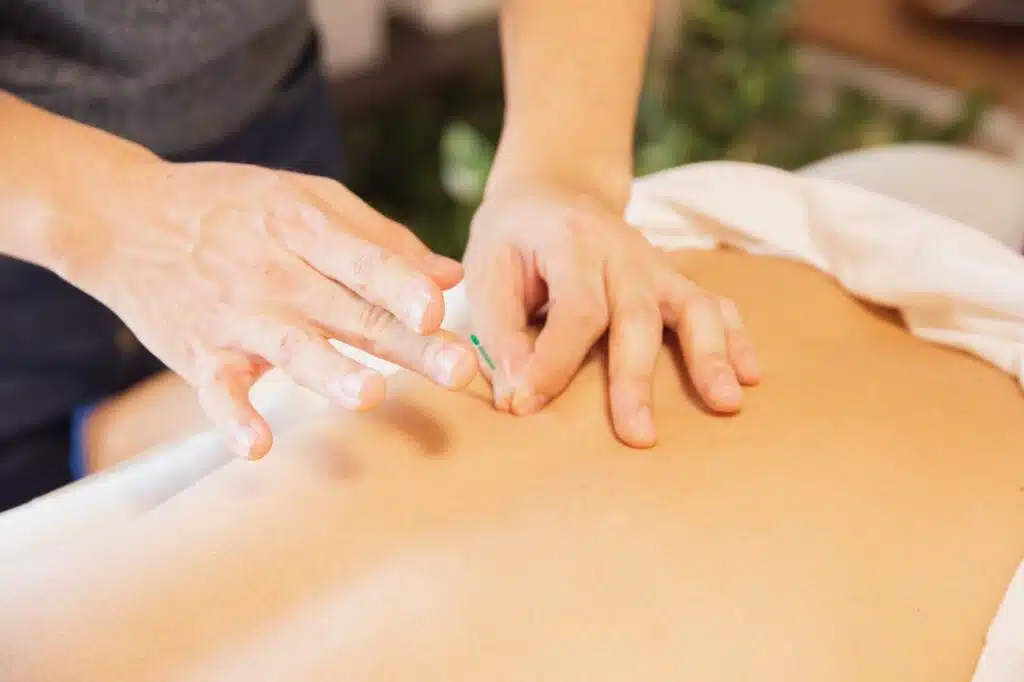
Scoliosis often puts extra strain on one side of the spine. It can create intense muscle knots. These tight bands, often called trigger points, can pinch or irritate the nerves surrounding the spine, worsening your symptoms.
Dry needling involves using a fine filament needle to treat trigger points. It eases muscle knots, promotes circulation, and relieves scoliosis-related pain, allowing you to move more freely.
Supportive Care
We offer pediatric scoliosis treatment, guiding the healthy development of spines and addressing symptoms early as children grow. We also provide prenatal care and support for pregnant mothers experiencing discomfort from scoliosis-related postural shifts.
Surgical Considerations
We might recommend spine surgery if your scoliosis curve is severe (a 45-50° Cobb angle) or if it starts affecting your internal organs. Our team will also support you through post-surgery physical rehabilitation for scoliosis, including chiropractic and wellness programs.
Benefits of Choosing Our Scoliosis Treatment
At Houston Spine & Rehab in Houston, we’ve got you covered from nonsurgical techniques and therapies to surgical scoliosis treatment. Our treatment for scoliosis includes:
- Comprehensive Care Under One Roof: Get nonsurgical and surgical treatment options in one convenient location.
- Multidisciplinary Therapies: Enjoy multidisciplinary care, including physical rehabilitation, chiropractic support, pain management, and dry needling.
- Support for Every Age: We offer pediatric and adult scoliosis treatment, along with tailored strategies and rehabilitation for all ages.
- Long-Term Relief and Function: Achieve lasting scoliosis pain relief, posture improvement, and enhanced mobility through structured, goal-oriented therapies.
- Individualized Care: Benefit from our patient-centered care with progress tracking to ensure your treatment is working for you.
When to See a Professional for Scoliosis
Are you noticing something’s off in your or your child’s posture? Don’t brush it off as mere growing pains or you just having occasional aches. Consider a professional assessment for scoliosis if you notice any or several of the following:
- Visible spinal curves or rib hump in yourself or your child
- Noticeably uneven shoulders, hips, or waistline
- Persistent back pain or discomfort that worsens over time
- Stiffness or difficulty maintaining a proper posture
Early check-up can help prevent curve progression and potential complications. The sooner you get evaluated, the better we can help you manage scoliosis. Talk to our medical staff at Houston Spine and Rehabilitation Centers for prompt, professional care.
Find Lasting Relief with Clinical Scoliosis Treatment in Houston
Early detection of scoliosis and receiving timely care helps prevent spinal curvature and related issues. Houston Spine and Rehabilitation Centers can help protect your spine with personalized nonsurgical and surgical scoliosis treatments. Book your consultation with us today.
Frequently Asked Questions
Typically, a diagnosis for scoliosis involves a physical examination and X-rays. In some complex cases, your healthcare provider might recommend MRI or CT scans to assess your spine’s curvature.
Back brace therapy can help you slow the progression of scoliosis. Often, bracing is recommended for growing kids with moderate curves, aiming to reduce the need for spine surgery.
Scoliosis patients with severe curves (over 40-50 degrees) or when nonsurgical scoliosis care isn’t helping with the treatment, spinal fusion surgery is considered. Your healthcare provider will discuss available options for your specific case.
Recovery after a scoliosis surgery may take 6 to 12 months, depending on each case. For a fast and complete recovery, work with your healthcare provider and get a personalized rehabilitation plan.
Scoliosis treatment is typically covered by insurance, especially when it’s deemed medically necessary. Still, your coverage for scoliosis care depends on your insurance plan. Please contact your insurance provider to discuss your benefits and options.