Chiropractic Traction: How It Works and Who It Helps

Back pain can make everyday activities harder, from getting through a workday to staying present for the moments that matter. With around 65 million Americans reporting episodes of back pain, it is one of the most common health concerns in the United States.
If your physician recommended chiropractic traction, understanding what it is and what a session feels like can help you feel more informed and confident as you take the next step towards relief.
What is Chiropractic Traction?

Chiropractic traction is a noninvasive, therapeutic technique that delivers controlled cycles of pulling and resting to gently stretch the spine. By slightly separating the vertebrae, chiropractic traction helps reduce pressure on compressed discs and nearby nerve roots, relieving back pain.
Manual Traction
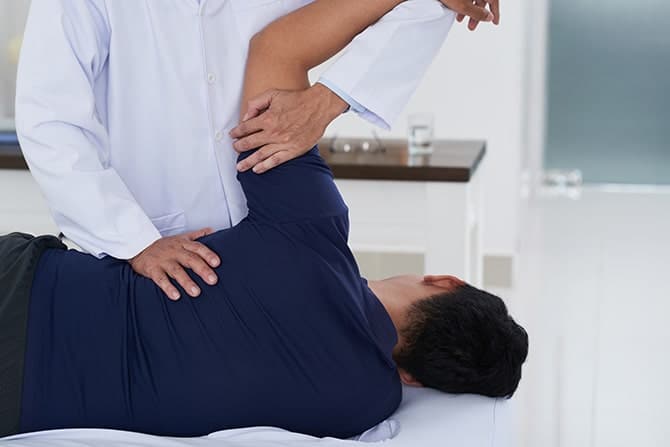
Manual traction is a technique that involves applying direct pressure to the back in order to gently stretch the spine. The aim of this method is to achieve a controlled and comfortable stretch rather than forcing the joint or spine beyond its limits.
Mechanical Traction
Mechanical traction involves using a traction table and a harness to slowly pull the entire spine for a set period of time. The amount of force and the duration can be adjusted and recorded so that each session consistently reflects your spine’s response to the traction.
Intersegmental Traction
Intersegmental traction uses a roller table to gently mobilize your spinal joints while you lie comfortably on your back, helping ease tension, improve flexibility, and promote relaxation.
The Equipment: Traction Tables and Roller Tables
Chiropractic traction therapy uses various tables designed to provide controlled movements and pressure to the spine.
Traction Table
A chiropractic traction table is similar to a padded treatment bench, having separate sections that move independently. The upper part remains fixed while the lower part moves slowly along a track. The movement is guided by a motor beneath the table to produce a controlled stretch of the spine.
Roller Table
A chiropractic roller table is a padded treatment table that has mechanical rollers constructed underneath its surface. When you lie comfortably on the table, the rollers move slowly up and down along your back, applying controlled pressure on various parts of the spine.
Traction vs. Spinal Decompression: What Is the Difference?
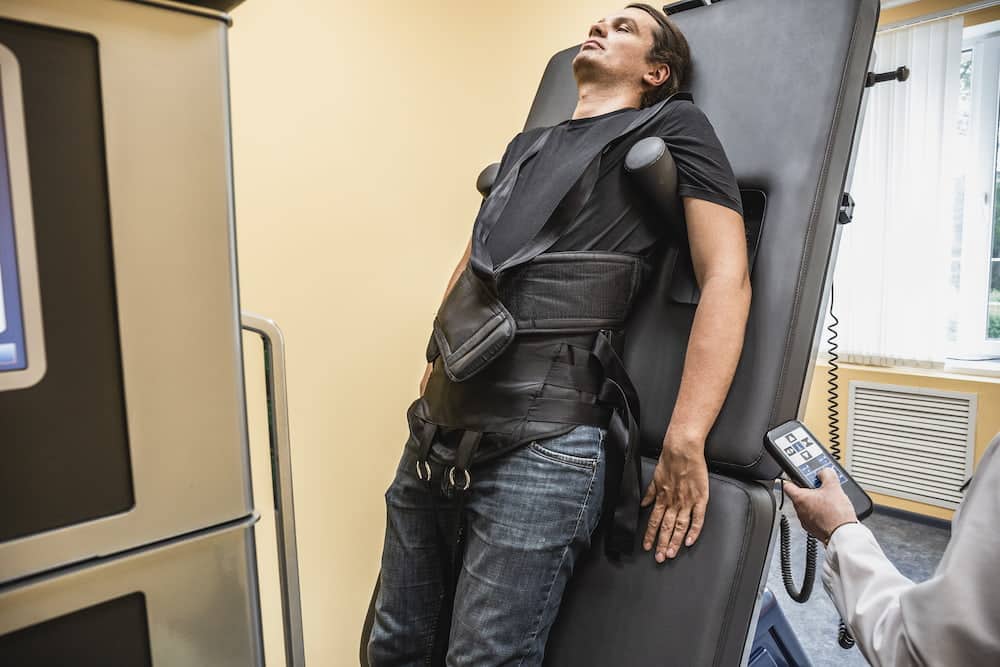
Both traction and spinal decompression use pulling to reduce pressure on the spine and discs. The main difference is that decompression adjusts the force as needed during treatment, whereas standard traction maintains a steady force for a set duration.
With decompression, if your muscles tense up, the machine quickly adjusts the pulling force. This helps your body relax and not resist the stretch. In regular traction, the force stays the same as originally set.
What Traction Is Used For
Traction may be considered for conditions involving spinal compression, disc changes, or restricted joint movement, including the following:
Herniated and Bulging Discs
Herniated and bulging discs occur when the soft, jelly-like center of a disc in your spine presses against nearby nerves, which can cause pain, numbness, or weakness in your neck, back, or legs.
Degenerative Disc Disease
Degenerative disc disease is a condition in which the discs between your vertebrae wear down over time. It is a normal part of aging caused by daily wear and tear, dehydration of the discs, or minor injuries.
Sciatica
Sciatica happens when the longest nerve in the body is compressed or irritated, causing pain, tingling, numbness, and weakness to spread from the lower back through the buttocks and down one leg.
Facet Joint Irritation
Facet joint irritation occurs when the small joints that connect and stabilize the vertebrae become inflamed. This can cause localized back or neck pain that often worsens with movements such as bending backward or twisting.
Does Traction Actually Work?
Yes. According to a study, manual traction is an effective approach to alleviating lower back pain caused by nerve irritation or compression. However, in most cases, a combined approach may offer the best result. Many patients who begin with traction slowly transition to traditional spinal adjustments to address restricted joint movement and restore spinal mobility.
Who Should Avoid Traction
While chiropractic traction is safe, it may not be necessary for every patient. If you have any of the following conditions, you may speak with your chiropractor to recommend a more suitable treatment.
- Severe osteoporosis
- Recent or unhealed spinal fracture
- Known or suspected spinal tumor
- Active spinal infection
- Pregnancy at any stage
- Recent spinal surgery
- Uncontrolled high blood pressure
What a Traction Session Involves
Proper preparation can help you feel more confident about achieving the best possible results from traction therapy. While every session is unique for each patient, the process generally includes the following steps:
- Thorough assessment: Before starting, your chiropractor will determine whether traction is appropriate for you. This usually involves reviewing your medical history, performing a physical exam, and ordering imaging if needed.
- Getting positioned: For most lower-back treatments, you will lie face up on the traction table. A supportive harness is then fitted around your body, with the chest strap secured comfortably to help maintain proper alignment throughout the session.
- Controlled pulling: Once you are positioned comfortably, the traction machine gradually applies a pulling force to your spine. The force builds to the prescribed level, holds briefly, and then releases. These cycles repeat throughout the session.
- Session duration: How long you stay on the table depends on your condition, treatment goals, and how you respond to therapy. A typical session lasts about 15 to 30 minutes.
- Treatment plan: Traction is usually provided over several weeks rather than as a one-time treatment. Your chiropractor for traction will monitor your progress and adjust the frequency or approach based on how your body responds.
- What you may feel afterward: You may notice mild, temporary soreness for a day or two, similar to how your muscles might feel after trying a new stretch. Sharp pain, numbness, or new leg symptoms are not expected and should be reported right away.
Traction and Decompression at Houston Spine & Rehabilitation Centers
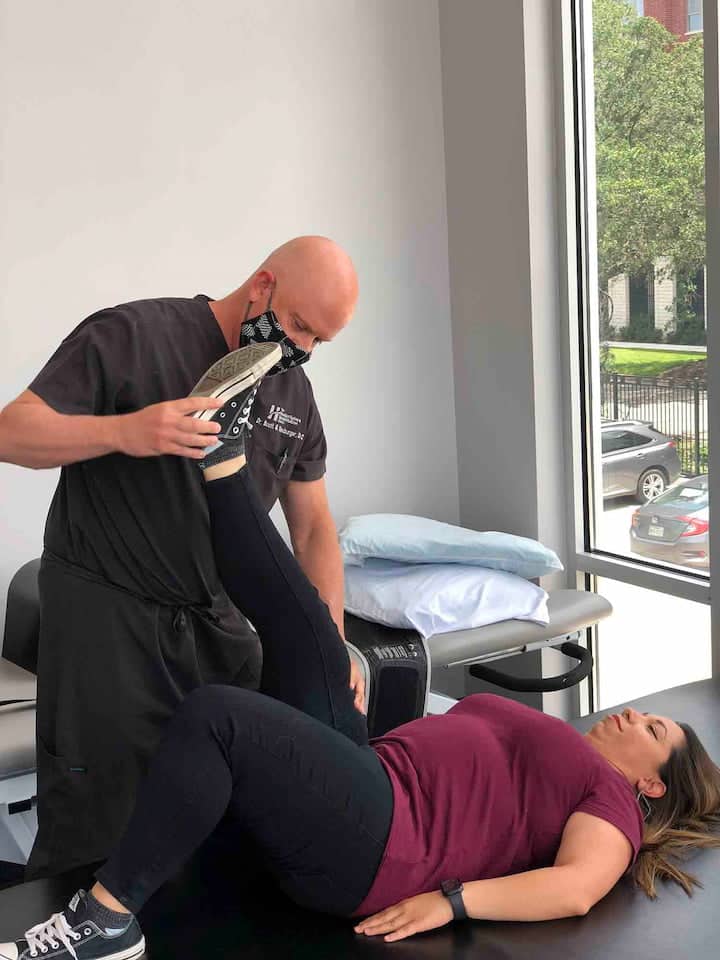
At Houston Spine & Rehabilitation Centers, traction is part of a personalized treatment plan designed to address the underlying cause of your symptoms. Depending on your needs, your care may also include chiropractic care, physical therapy, or pain management to support your recovery.
A Simple Idea, Applied Precisely
If your back, neck, or nerve pain persists despite rest and pain medication, chiropractic traction offers a noninvasive, therapeutic solution. By gently relieving nerve compression, this technique helps alleviate pain and discomfort.
Know whether traction therapy is right for you. Book an evaluation at Houston Spine & Rehabilitation Centers today.
Frequently Asked Questions
Chiropractic traction is a noninvasive treatment that can be performed either manually or with a motorized table, depending on your specific condition and treatment needs. It involves applying a controlled pulling force to gently stretch the spine, thereby decreasing pressure on the spinal discs and irritated nerve roots.
Unlike manual and mechanical traction, which use a pulling force to reduce pressure on the spine and discs, intersegmental traction uses a roller table to gently move the spine in upward and downward motions to improve spinal mobility and reduce stiffness.
Yes. Traction may help herniated discs by reducing pressure around the affected disc and nerve root. However, a comprehensive, whole-body approach may help achieve the best results in alleviating pain and enhancing mobility.
No. Traction is a broad treatment category that includes manual, mechanical, and intersegmental techniques. Spinal decompression is a specific form of mechanical traction that uses controlled, computer-guided forces to target specific areas of the spine.
Traction in chiropractic care is generally safe when provided by a licensed clinician. However, it may not be suitable for people with severe osteoporosis, spinal fractures, tumors or infections, recent spinal surgery, or certain pregnancy conditions.
To ensure that traction is safe for you, it is important to provide your clinician with a full account of your medical history during your assessment.
The number of traction sessions needed depends on your diagnosis and how you respond to treatment. A chiropractor who provides traction will assess your condition, create a personalized plan, and reassess your progress along the way to adjust treatment as needed.