Can a Chiropractor Help with Sciatica? What Treatment Involves

One wrong twist while lifting, and a hot, shooting pain runs from your lower back down the back of your leg. If that just happened to you, you are not alone. According to Yale Medicine, 10% of people with lower back pain have sciatica.
When considering treatment options, many people ask: Can a chiropractor help with sciatica? The answer lies in what is causing the nerve irritation and the symptoms that you are experiencing. Understanding the capabilities and limitations of chiropractic care can help you choose the safest path to relief.
Benefits of Chiropractic Treatment for Sciatica

Chiropractic treatment for sciatica focuses on realigning the spine to alleviate pressure on the sciatic nerve, reducing pain and inflammation. Through gentle, precise techniques tailored to each patient’s needs, regular visits can also enhance overall spinal health, supporting better posture and movement patterns that minimize recurring sciatica episodes.
Can a Chiropractor Help With Sciatica? What the Evidence Says
Yes, but not in every instance. A chiropractor may be able to relieve sciatica depending on the underlying cause of the nerve irritation. This has been supported by a study that found patients with radiating pain achieved better long-term outcomes with chiropractic care.
However, if your symptoms are a result of a herniated disc or spinal stenosis, coordinated care may be required to relieve your pain.
How Long Does Chiropractic Treatment for Sciatica Take, and How Many Visits?
The length of chiropractic care for sciatica varies depending on what is irritating or compressing the nerve. Some patients notice symptom changes within the first two weeks, while others with a herniated or bulging disc, spinal stenosis, or degenerative cases may need several weeks of care.
Symptoms that have lasted for months, more severe leg pain, smoking, diabetes, or prolonged sitting can also affect how quickly you improve. Your chiropractor should reassess your progress regularly and adjust your treatment plan once your condition improves.
What the First Visit Actually Involves
Your first appointment is mostly assessment, not treatment, and runs roughly 45 minutes to an hour. Here’s how it looks in practice.

- Symptom Assessment: Your provider will ask when your pain started, what triggers it, and whether it changes when you sit, cough, or bend backward.
- Movement Testing: To identify which nerve root is irritated, you will be asked to bend, walk on your heels and toes, and squat and rise.
- Neurological Screening: To rule out spinal tumors and fractures, your chiropractor will perform a reflex check and strength and sensation testing.
- Imaging: If your symptoms persist for more than a few weeks, a chiropractor for lower back pain and sciatica may recommend an X-ray or MRI to better understand the cause and confirm the diagnosis.
- Personalized Treatment: Once we confirm the diagnosis, we tailor a care plan designed to relieve your pain and improve your range of motion. In appropriate cases, your treatment may begin the same day.
When Chiropractic Is Not the Answer for Sciatica
Most cases of sciatica are not emergencies and usually do not need surgery, but in order to know if a chiropractor can fix your sciatica, you first have to identify the cause and exclude any serious symptoms. Get emergency care if you notice:
- Loss of bladder or bowel control
- Progressive weakness in your leg or foot
- Foot drop or inability to lift your foot
- Numbness in your groin or inner thighs
- Numbness that spreads
- Pain that follows a fall or a serious injury
Why Choose Houston Spine & Rehabilitation Centers
Choosing the right sciatica chiropractor means more than booking a series of separate appointments. At Houston Spine & Rehabilitation Centers, your care follows a structured program designed to help you feel your best.
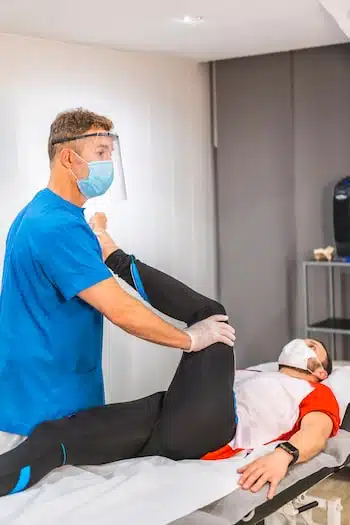
- Noninvasive Treatments: Our chiropractic care for sciatica may include a combination of chiropractic adjustments, nonsurgical spinal decompression, flexion-distraction, soft tissue work, dry needling, physical therapy, and cold laser therapy.
- Licensed Professionals: Our healthcare providers are licensed and have years of experience providing evidence-based care for patients with acute and chronic sciatica resulting from sports- and injury-related conditions.
- Personalized Plan: Our practice takes a holistic approach to care, providing a personalized plan that targets your symptoms and supports your overall health goals.
- Accessible Care: We accept most major insurance carriers, including Medicare and TRICARE. Coverage varies by plan, so we strongly encourage you to call your insurance provider to confirm your benefits before your first appointment.
- Flexible Scheduling: To ensure seamless care, our clinics in Houston and The Woodlands offer walk-ins and same-day appointments.
Finding Long-Term Relief Starts with the Right Diagnosis
Sciatica is not the diagnosis. It is a symptom of something pressing on the sciatic nerve. If your pain has lasted more than a few weeks and you are wondering if a chiropractor can help with sciatica, Houston Spine & Rehabilitation Centers offers comprehensive assessments and personalized noninvasive treatments designed to relieve your pain and enhance your mobility.
Schedule your appointment today and take the next step toward lasting relief from sciatica pain.
Frequently Asked Questions
Chiropractors place controlled force on misaligned joints and sections of your spine that are pinching the sciatic nerve. This alleviates pain, numbness, and weakness in your lower back down to your feet.
Yes! Chiropractic care is a noninvasive way to retract herniated discs and relieve the pressure they place on the sciatic nerve and surrounding soft tissues.
It depends on your symptoms, condition, and biology, but many of our patients start to experience sciatica pain relief after a few chiropractic sessions.
Most of the time, yes. However, if your pain persists for several days, it’s best to reach out to a chiropractor for help to prevent further complications.
Avoid heavy lifting, slouching, and prolonged sitting, which could worsen sciatic nerve pressure.
Patients who see a chiropractor for sciatica pain generally have two or three appointments each week during the first few weeks. The length of treatment will vary between six and twelve weeks, depending on the cause and the severity of the condition. Your chiropractor will reassess your condition and adjust your treatment as needed.
It depends on what is causing the nerve irritation. A chiropractor for sciatica can address contributing factors, such as muscle tension or joint restrictions, that may be putting pressure on the nerve. When these issues are corrected, the episode may resolve.
Structural causes, such as a herniated disc or spinal stenosis, are usually managed rather than permanently cured, although many patients can still achieve lasting relief.
Sciatica should be evaluated further if you develop progressive leg weakness, foot drop, spreading numbness, pain after significant trauma, or symptoms that fail to improve after several weeks of conservative care. These signs may indicate a condition that requires imaging or referral rather than continued adjustment.
Loss of bladder or bowel control, especially with numbness around the groin or inner thighs, is a medical emergency and requires immediate medical attention.
Neither is necessarily better on its own because they serve different purposes. Chiropractic treatment for sciatica can help address joint restrictions and mechanical factors that may be irritating the nerve, while physical therapy focuses on rebuilding strength, mobility, and movement patterns to support long-term recovery.
For many patients, combining the two approaches provides more comprehensive care by addressing symptom relief and factors that may contribute to recurrent sciatica.