What Is The Activator Method?
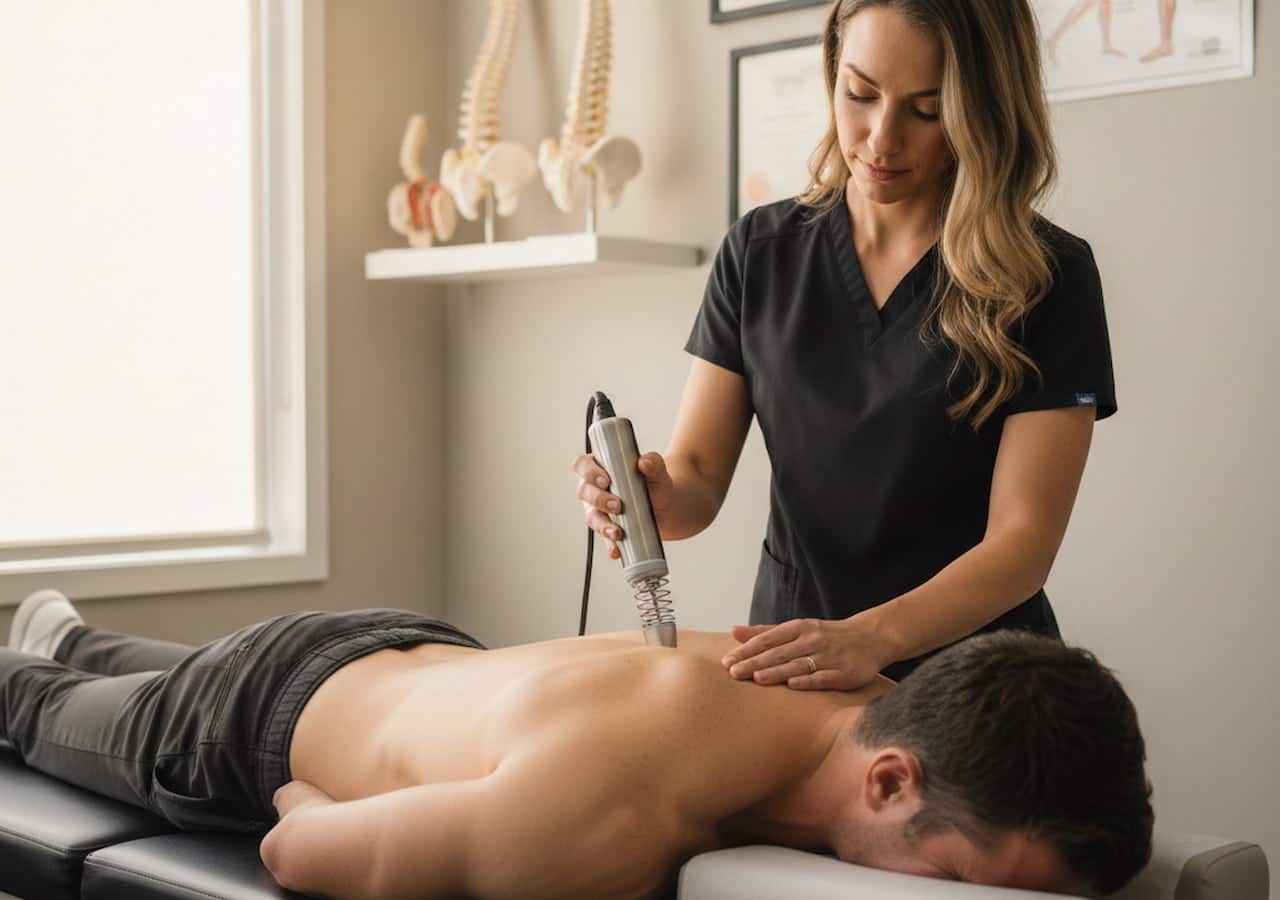
You go to a chiropractic office to get an adjustment for your neck pain, but you are advised that a manual adjustment may not be suitable for you. This is where the Activator Method comes in.
The Activator Method is a low-force technique that uses a small “clicker” or “punch tool” to deliver a fast, targeted impulse to a joint, offering an alternative to traditional hands-on adjustments.
Understanding how the Activator Method works and how it compares with manual adjustments helps you get the right care that fits your needs.
What the Activator Method & Instrument Are
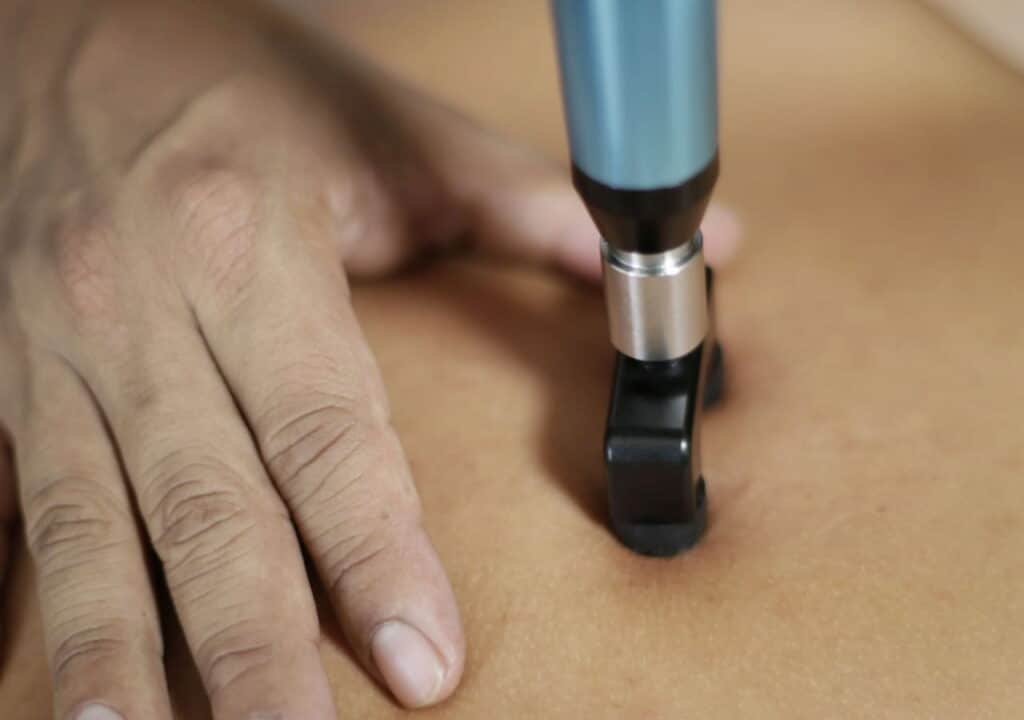
To perform the Activator Method, chiropractors use an activator adjusting instrument. It is a small, handheld device that uses a spring-powered mechanism to move a 16-gram hammer against a 30-gram stylus, creating a quick, controlled impulse.
Its rubber-tip stylus is about the width of a pencil eraser, so the contact area stays small and localized. Before the actual treatment, the firm tapping force can be adjusted across several settings. A child or an older adult with fragile bones receives a fraction of what a healthy young athlete would get for the same joint.
How an Activator Adjustment Works
The Activator Method begins with a structured examination to identify the joint being treated and the direction of the adjustment. The chiropractor then positions the instrument at a specific point and delivers a quick, controlled impulse.
Because the impulse is so brief, it can target the joint before the surrounding muscles can tense and guard against the adjustment. Also, compared to manual adjustments, the Activator Method does not produce a popping sound. That’s normal. The sound is not what makes an adjustment effective.
Beyond the adjustment technique itself, the Activator Method has a formal training and certification structure. That certification is a real credential, so it is fair to ask whether the chiropractor treating you holds it.
Activator vs. Manual Adjustment: Which One and Why
Neither one is the lesser version of the other, and chiropractors choose one approach over the other based on the patient’s symptoms, treatment goals, and comfort level.
A manual adjustment covers more joint surfaces at once and is often faster in straightforward cases. An activator chiropractic adjustment is more precisely targeted, requires no twisting of your body, and is easier for an anxious or acutely painful patient to tolerate.
The table below guides you on how each technique delivers force, positions the body, and may fit different clinical situations.
| Activator Method | Manual adjustment | |
|---|---|---|
| Force delivery | Instrument, fixed and adjustable settings | Clinician’s hands, judged by feel |
| Precision | Single segment, localized | Broader, covers adjacent segments |
| Sound | Usually silent | Audible pop is common |
| Positioning | Minimal, often seated or lying still | Requires rotating or positioning you |
| Best fit | Fragile bone, acute pain, apprehensive patients | Straightforward cases, broad restriction |
Activator Method and Active Release Technique Are Not the Same Thing
These two techniques are often confused, but they work in very different ways. The Activator Method is an instrument-assisted chiropractic adjustment that uses a handheld device to deliver a quick, controlled impulse to a specific joint.
Active Release Technique (ART) is a hands-on soft tissue technique in which the clinician applies targeted pressure to muscles, tendons, or other soft tissues while you move through a specific range of motion.
The target, technique, and purpose differ: the Activator Method focuses on joint movement, while ART focuses on soft-tissue tension and mobility.
Who the Activator Method Is Best Suited To
The Activator Method may be a good option for older adults, people with acute pain, or anyone who prefers a gentler approach without twisting or popping. Its controlled force can also work well for children and smaller joints, such as the wrist, elbow, ankle, and foot, where precise contact matters.
However, that does not mean the Activator Method is right for everyone. When several areas of the spine need treatment at once, a manual adjustment may be more practical and efficient.
What the Activator Method Is Used For
The Activator technique can address many of the same joint and musculoskeletal concerns treated with manual adjustments, such as:
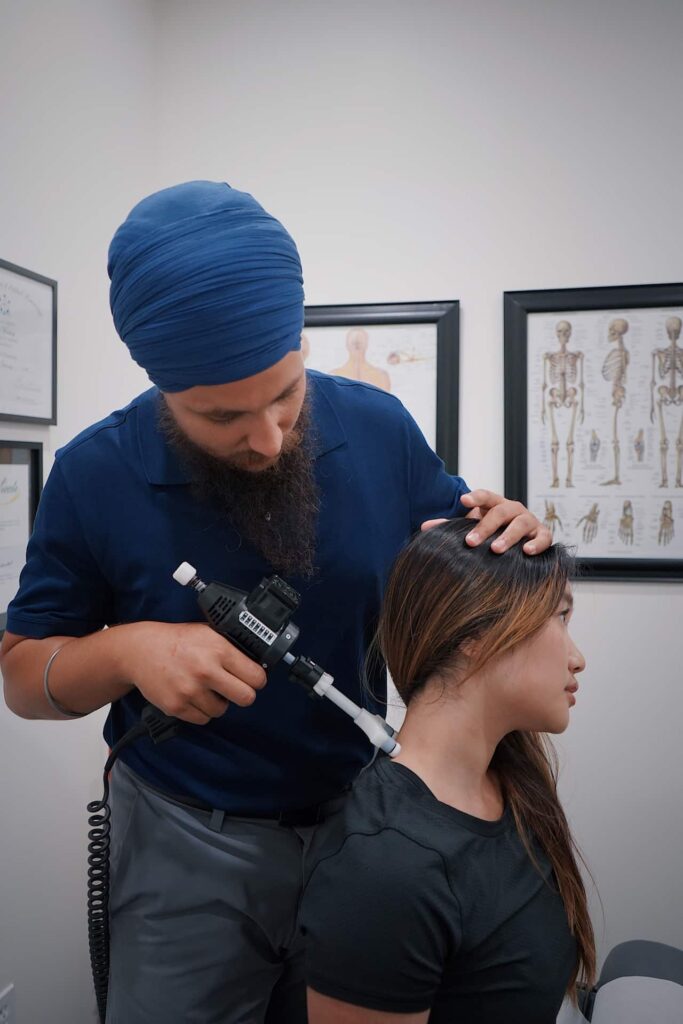
- Neck pain and stiffness: The Activator delivers a precise impulse without twisting or rotation.
- Middle and lower back pain: The controlled impulse can target restricted spinal segments and hard-to-reach areas without subjecting the body to a forceful adjustment.
- Cervicogenic headaches: The Activator Method uses a targeted, low-force adjustment that may help address joint restriction in the upper neck without requiring forceful neck movement.
- Extremity joints: The Activator can also be used on smaller joints in the shoulders, elbows, wrists, knees, ankles, and feet, without applying unnecessary force to the surrounding tissues.
Does the Activator Method Actually Work?
Yes. Research has found that the Activator Instrument has meaningful benefits for acute and chronic low back pain, acute and subacute neck pain, TMJ disorders, and trigger points in the upper back, neck, and shoulders.
This evidence supports the Activator Method as a gentle, targeted option for patients who prefer a more controlled approach to chiropractic care.
Is the Activator Method Safe? Side Effects and Who Should Avoid It
The Activator delivers less force than a manual thrust, although that does not mean patients never feel anything afterward. A 2010 randomized trial in Chiropractic and Osteopathy for neck pain reported a low risk of adverse effects, with minor side effects such as stiffness and soreness that resolve within one to three days.
However, the Activator Method may not be appropriate for everyone. Tell your chiropractor if you have an infection, fracture, advanced osteoporosis, a bone tumor, recent surgery, or if you are taking anticoagulants so they can recommend the safest treatment option for you.
Low-Force Adjustment at Houston Spine & Rehabilitation Centers

At Houston Spine & Rehabilitation Centers, we consider your condition, symptoms, and treatment goals to determine whether a low-force adjustment is the right fit for you. When appropriate, techniques such as the Activator Method can provide a gentle, controlled approach to care.
Our team can also combine low-force adjustments with physical therapy and pain management when needed, creating a coordinated treatment plan designed to address your symptoms from multiple angles.
Conclusion: Gentler, Not Lesser
Your comfort matters when choosing how you receive care. If you need or prefer an alternative to manual adjustments, the Activator Method offers a low-force approach to chiropractic care without compromising the treatment’s purpose.
At Houston Spine & Rehabilitation Centers, we take the time to understand your symptoms, preferences, and treatment goals so your care feels both comfortable and appropriate for your needs. Schedule a consultation to explore whether the Activator Method or another approach may be right for you.
Frequently Asked Questions
The “clicker” is commonly known as the chiropractic activator tool, a handheld device that delivers a quick, controlled, low-force impulse to a specific joint. Some patients also refer to it as a “punch tool” or “chiropractic gun.”
No. Most patients feel a quick, controlled tap that lasts only a fraction of a second rather than the pressure or twisting associated with some manual adjustments. Mild tenderness or soreness at the point of contact can occur afterward, but it is typically temporary and settles within a day.
If you are worried about it, tell your chiropractor before the first adjustment so they can start at a lower force setting and explain what you can expect to feel.
An Activator adjustment typically does not produce the popping sound associated with some manual adjustments. That sound occurs when gas is released within a joint during certain types of joint movement.
Because the Activator delivers a brief, controlled impulse rather than the same type of movement, a pop usually does not occur. The absence of a popping sound does not mean the adjustment was ineffective.
Yes, the Activator Method can be comparable to the manual adjustment method. It can treat different types of musculoskeletal conditions, such as acute and chronic low back pain, acute and chronic neck pain, and TMJ disorder.
Your chiropractor will recommend the most appropriate technique based on your condition, symptoms, and treatment goals.
Yes. The Activator Method offers a gentle approach for older adults and children, with force settings adjusted to each patient’s needs. If you have advanced osteoporosis, a recent fracture, or recent surgery, let your chiropractor know so they can determine whether this technique is appropriate and ensure your care is safe and comfortable.
Yes. You can let your provider know during the evaluation if you prefer an adjustment using the Activator Method instead of a traditional one. If it is not clinically appropriate, your chiropractor should explain why and offer an alternative.
No. The Activator Method uses a handheld instrument to deliver a controlled joint adjustment, while Active Release Technique is a hands-on soft tissue treatment that involves movement of the affected area.