Nonsurgical Carpal Tunnel Relief: Is It Possible?

You’ve tried wrist splints and anti-inflammatory medications, yet the numbness, tingling, and nighttime pain persist. When standard remedies fail, it’s completely natural to start wondering how to fix your carpal tunnel without surgery.
The good news is that the medical landscape is evolving, and going under the knife is no longer your only option. Understanding today’s treatment approaches can help you find a safer, nonsurgical option for carpal tunnel relief that supports healing.
Why Standard Carpal Tunnel Treatments Often Fail

When you are diagnosed with mild-to-moderate carpal tunnel syndrome (CTS), standard treatments like resting your wrist, taking over-the-counter painkillers, and wearing wrist splints are usually the first steps. While these methods are great at lowering your pain, they often act as a temporary band-aid solution rather than a permanent cure.
According to the National Institutes of Health, tools like night splints do a wonderful job of keeping your wrist straight, taking pressure off the nerve, and easing your pain. However, they only treat your symptoms, not the root cause of the physical strain. Because of this, the relief often only lasts for a few weeks before the discomfort returns.
Understanding Double Crush Syndrome: The Missing Link in Carpal Tunnel Relief
Double Crush Syndrome happens when a single nerve is pinched or compressed in two or more different places along its path. Because the nerve is already irritated in one spot, it becomes incredibly fragile. This means even a tiny amount of pressure somewhere else can trigger severe symptoms.
In carpal tunnel patients, the two most common compression points are the carpal tunnel at the wrist and the median nerve that originates in the cervical spine. If your neck nerve is irritated, your wrist becomes much more vulnerable. A small amount of wrist pressure can cause intense pain, numbness, or tingling.
That connection between cervical spine health and hand symptoms is why so many patients with wrist splints still wake up in the middle of the night with numb hands. A complete evaluation that includes the entire musculoskeletal chain is important to target the root cause of pain.
Diagnostic Benchmarks: When Is Nonsurgical Treatment Right for You?
When determining the most effective approach for your recovery, medical providers rely on advanced diagnostic benchmarks. These tests allow them to pinpoint the location and severity of your injury and determine whether your condition can be successfully resolved without surgery.
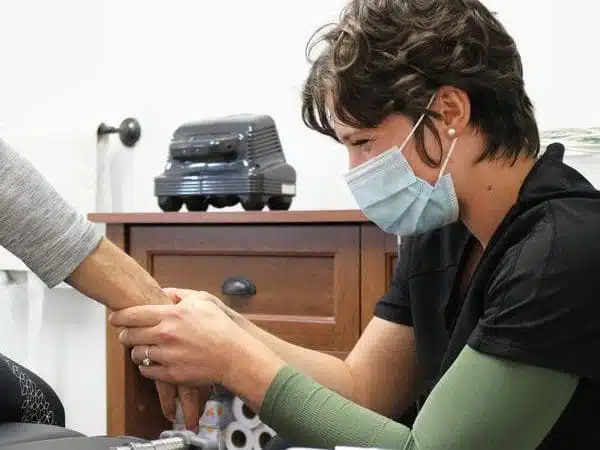
- Nerve Conduction Velocity Testing: Measures how fast and how well the electrical signals travel through your nerves, checking for blockages or delays.
- Electromyography: Tracks the electrical health and activity of the muscles at rest and during contraction to determine the cause of muscle weakness, numbness, and cramping.
- Targeted Physical Examinations: Checks physical signs such as grip strength, neck movement, and standard nerve-tapping or pressure tests to see what triggers your symptoms.
- Advanced Diagnostic Imaging: Scans such as X-rays or MRIs are used to detect deeper structural problems, such as a slipped disc in the neck.
Signs You May Be a Good Candidate for Nonsurgical Carpal Tunnel Relief
Not everyone needs surgery for CTS. If your symptoms match the following profile, you are likely an excellent candidate for nonsurgical carpal tunnel relief.
- Mild-to-Moderate Nerve Compression: Your condition has been professionally evaluated, and nerve irritation has been confirmed to be in its early-to-middle stages.
- Frequent Numbness and Tingling: You experience intermittent or persistent “pins and needles” in your thumb, index, or middle fingers, but have not lost total sensation.
- Clear Positional or Repetitive Triggers: Your symptoms are visibly flared by daily habits, such as poor posture, an unoptimized workstation setup, or repetitive hand and wrist motions.
- No Signs of Muscle Wasting: The muscles in your hands remain full and healthy.
- Strong Grip and Function: You still maintain your baseline hand strength and agility.
When Surgery May Be Necessary
While conservative treatments like splinting, physical therapy, and pain injections are effective for mild to moderate cases, certain clinical findings may indicate that surgery is appropriate.
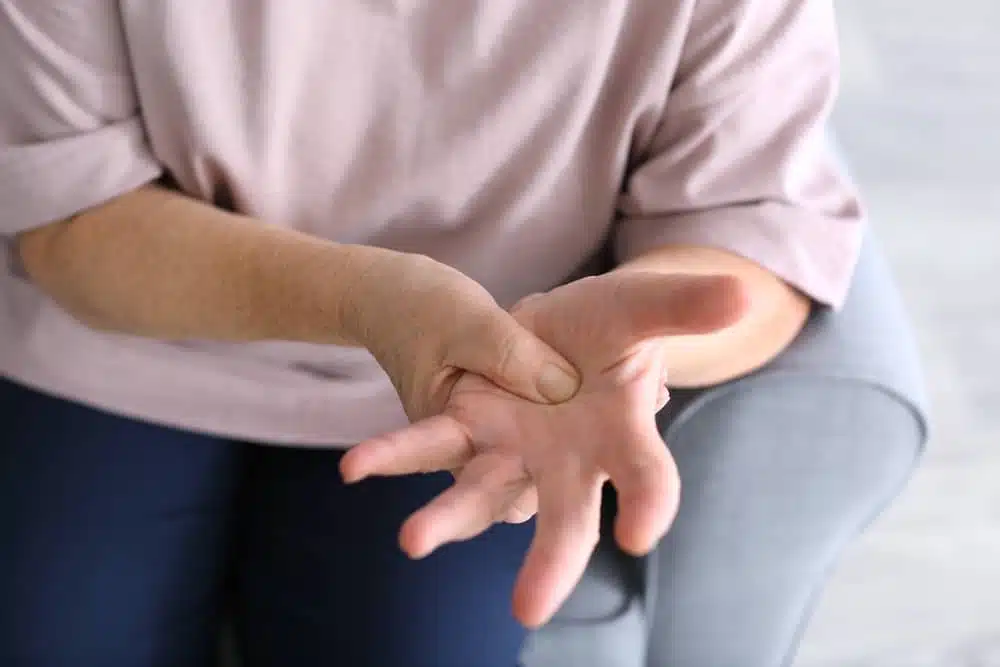
- Advanced Nerve Damage: Electromyography or Nerve Conduction Velocity testing shows severe median nerve compression or significant abnormalities.
- Thenar Muscle Atrophy: The muscles at the base of the thumb show visible wasting or flattening.
- Progressive Hand Weakness: A measurable loss of grip or pinch strength, or frequently dropping objects.
- Persistent Numbness: Sensory loss that has become constant and has failed to improve after a structured rehabilitation program.
Coordinated Approach to Nonsurgical Carpal Tunnel Relief
Carpal tunnel syndrome is rarely an isolated wrist issue. Often, it involves the entire nerve pathway from your neck down to your hand. Because of this, treating only the wrist rarely works.
Coordinated care, like a combination of different therapies and approaches, helps address the entire nerve pathway rather than just treating the localized wrist pain.
- Chiropractic Care: A chiropractic assessment, along with targeted adjustments, helps identify and address the underlying cause of your pain.
- Soft Tissue Rehabilitation: Targeted soft-tissue techniques help restore normal muscle flexibility and improve nerve function, allowing you to regain mobility slowly.
- Biomechanical and Posture Correction: Postural retraining restores proper spinal alignment, helping to reduce neurological stress, improve function, and prevent recurring spinal strain.
- Ergonomic Modification: Tailoring your daily environment helps eliminate repetitive microtrauma that triggers median nerve inflammation.
Managing these therapies across separate offices can lead to fragmented communication and disjointed treatment. Choosing an integrated clinic where the entire team works under one roof ensures you get a smoother, faster, and more effective recovery.
What to Expect: Your Carpal Tunnel Recovery Timeline
The carpal tunnel recovery timeline varies based on how long symptoms have been present, the degree of nerve compression, and how consistently patients follow the plan. Here is what a realistic, phase-based recovery looks like.

- Phase 1: Symptom Reduction (Weeks 1-4): During this phase, treatment prioritizes reducing inflammation, restoring cervical motion, and improving nighttime comfort.
- Phase 2: Mobility and Strength Restoration (Weeks 4-8): This phase focuses on rebuilding grip strength, reclaiming flexibility, and restoring daily hand agility.
- Phase 3: Long-Term Prevention (Week 8 and beyond): This phase focuses on maintenance care and injury prevention.
Comparing Your Options: Surgery vs. Integrated Recovery
Choosing between surgery and integrated care is an important step in your recovery journey. To help you navigate your carpal tunnel treatment options, the comparison table below outlines the essential differences in recovery time, risk of recurrence, post-treatment, and long-term management.
| Category | Surgical Release | Integrated Nonsurgical Recovery |
|---|---|---|
| Recovery time | 4–12 weeks (light duty); 3–6 months (full activity) | 2–8 weeks for most patients, depending on the severity |
| Downtime from work | 1–6 weeks (varies by job demands) | Minimal; most patients maintain modified duties |
| Risk of recurrence | 10–20% within 5 years if the root cause is unaddressed | Lower when cervical and postural factors are corrected |
| Post-treatment rehab | Occupational therapy is typically required | Rehab is the treatment; no separate phase needed |
| Long-term management | May not resolve proximal nerve compression | Addresses upstream nerve compression pathways |
Frequently Asked Questions About Nonsurgical Carpal Tunnel Relief
The main difference comes down to what is causing the pain and exactly where you feel it. Carpal tunnel syndrome occurs when the median nerve in your wrist is compressed, leading to a predictable pattern of tingling and numbness in the fingers, along with nighttime hand pain and grip weakness.
General wrist pain typically involves the tendons, joints, or soft tissues and lacks the characteristic nerve distribution pattern. If you aren’t sure which one you are experiencing, a professional evaluation can help distinguish between them through a physical examination and electrodiagnostic testing.
Yes, it is possible. Sustained or repetitive keyboard use is a contributing factor, particularly when combined with a workstation that places the wrist in a flexed or extended position for extended periods.
However, repetitive hand activity is often the trigger that reveals compression already present at the carpal tunnel or cervical spine, rather than the sole cause. This is why ergonomic correction alone sometimes resolves symptoms, and why a full evaluation of the neck and shoulder is valuable for desk workers.
Watch out for nighttime hand pain that wakes you from sleep, persistent tingling in the thumb and first two fingers, dropping objects unexpectedly due to grip weakness, and numbness that extends up the forearm, as these are all signs that warrant professional evaluation.
Ultimately, timing is critical. Severe CTS conditions may be too late for nonsurgical treatment options, so having your CTS diagnosed early, before it worsens, is highly ideal.
During sleep, many people adopt wrist positions that increase pressure within the carpal tunnel. Combined with the natural reduction in movement during sleep, fluid can accumulate, increasing compression on the median nerve. This is why nighttime splinting can reduce symptoms. However, relief lasts only a few weeks because it does not address the underlying nerve pathway.
Seek evaluation when symptoms such as progressive weakness, nighttime pain affecting daily performance, and muscle wasting in the thumb pad persist for over four to six weeks. The earlier an evaluation occurs, the broader the range of nonsurgical options available.
Real Recovery Stories: Restoring Function Without Unnecessary Surgery

Reclaim Your Hand Health: Schedule a Comprehensive Evaluation
True recovery from carpal tunnel pain begins with an accurate diagnosis. When a treatment plan fails, it’s usually because the evaluation stopped at the wrist instead of tracing the full nerve pathway.
At Houston Spine & Rehabilitation Centers, we don’t guess; we investigate. Our experienced team is committed to finding the root cause of your discomfort and providing the nonsurgical carpal tunnel relief you need to restore your quality of life. Schedule a consultation today and start living pain-free.